


January 3rd, around 1 a.m. local time, fighter jets and bombs could be heard overhead in Caracas, Venezuela. Civilians woke up confused and distressed, with one Venezuelan Clinton student expressing how her family was “filled with uncertainty and unease.”
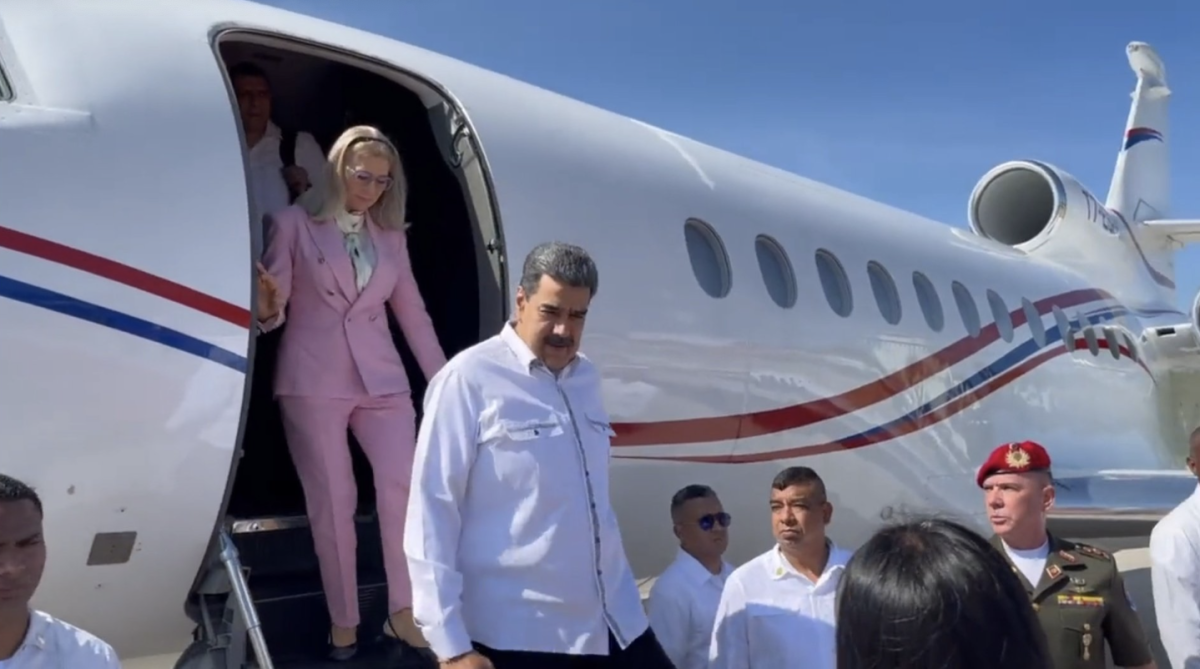
US special forces’ “Operation Absolute Resolve” was underway, with their main goal being to capture Nicolas Maduro, the Venezuelan president, while returning without casualties.
Maduro rose to power in 2013 and has stayed in his position as the president through what many believed were rigged elections. He has been accused of government corruption and conspiring with drug-trafficking groups, including the Revolutionary Armed Forces of Colombia (FARC), by the United States, other Latin American countries, and the European Union (EU). Specifically, according to BBC News, he is facing charges of “engaging in a narco-conspiracy with designated terrorist groups, conspiring to traffic cocaine into the US, and possessing and using illegal weapons – primarily machine guns – to carry out the alleged conspiracy.”
For months, the US was surveilling every aspect of Maduro’s daily life, from what he ate to when he woke up to where he went. This was all in accordance with their plan to capture Maduro, along with his wife, and four others, including the interior ministers of Venezuela and a leader of the drug gang, Tren de Aragua.
However, now that the U.S. has Maduro in custody in Brooklyn’s Metropolitan Detention Center, everybody seems to be wondering, “What will happen next?” And, for the most part, nobody knows. When questioned about future steps, President Trump replied by saying the US will “run” Venezuela, although it is unclear what exactly he means by that. Additionally, even within the same administration, confusion has arisen. Secretary of State Marco Rubio denies any claim that the US is at war with Venezuela. Yet, the president has said that if Venezuela does not cooperate by cracking down on drug trafficking and opening up its oil industry to the US, “we are ready to stage a second and much larger attack.”
Amongst all this chaos and miscommunication, it can be easy to forget the people who are actually being impacted by this event. One Clinton eleventh grader, Isabel Vargas, has felt these impacts directly. Before Maduro’s election, she remembers going to visit her family in Venezuela for “birthdays, Christmas, vacations, baptisms, communions, marriages, etc as a way to celebrate these moments together.” However, she and her family members have been unable to travel due to fear of being denied entry and reentry between countries, making it very difficult for Isabel’s family to connect and reunite.
Mr. Maduro has been defending his case, pleading not guilty. He has expressed his anti-Western ideology, specifically how he feels that this whole operation was a setup for the US to take control of Venezuelan oil reserves. However, others argue that he was an authoritarian dictator whose regime sought to maintain control over his citizens, and they see his capture as beneficial for Venezuela. Vargas expressed her constant disdain for Maduro’s rule, explaining how it all was just “to steal, become billionaires and destroy the country, its natural resources, its companies, its infrastructure, its institutions.”
Clinton’s global politics teacher, Ms. Dikes, saw many connections between what is going on now and what she teaches in her own class. As she said, this operation is “everything about global politics.” Imperialism, Western-central ideology, and colonialism are all concepts covered in her class and are present throughout this situation. She expressed how the operation comes out of an “imperialist assumption that the U.S. has traditionally had about the region; that the U.S. gets to decide what’s appropriate in this region and will exert its authority to do so.”
Ms. Dikes also emphasized that, even with Maduro’s capture, Venezuela is still under the same regime, with Vice President Delcy Rodríguez, a strong supporter of Maduro, acting as the interim President.
With the many mixed stances on Maduro’s capture, it is hard to say what will happen going forward. People have all different opinions on the situation, even those within the same government administration. It is unclear the type of relationship the U.S. will have with Venezuela, whether it will truly “run” Venezuela as the President has said. For the time being, Maduro is still awaiting a final court ruling, but has stuck with his plea of innocence.