















Currently, at Clinton, through the week of March 9th, Civics Week is being held, and students are being encouraged to participate in mock elections. On March 3rd, the states of Texas, Arkansas, and North Carolina held real Democratic and Republican primary elections, deciding the 2026 ballot in November. These primaries are the first of 2026, and their results are crucial in determining what the November elections will look like.
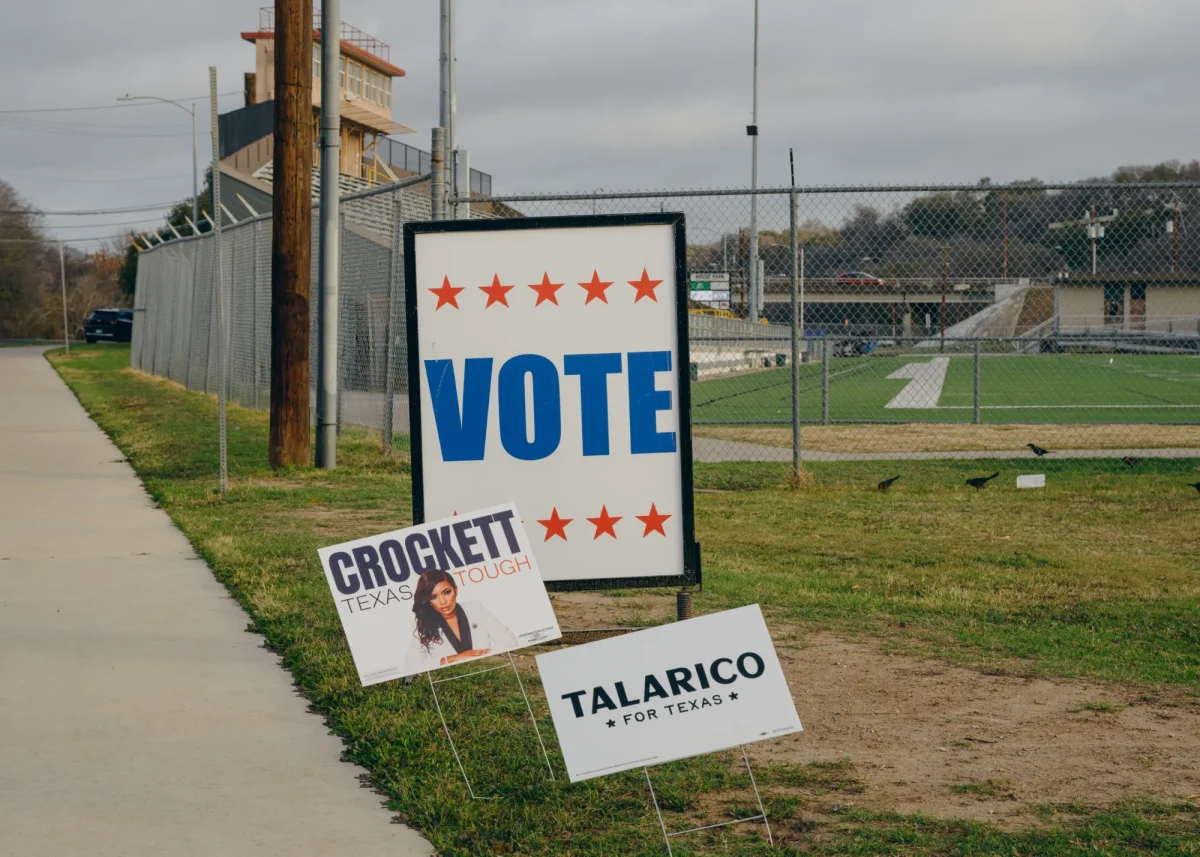
In Texas, primary elections were held deciding the Republican and Democratic ballots for seats in the Senate, House of Representatives and Governor. Both Senate nominations were close, with James Talarico appealing to more moderate Democrats but only winning by a 52% margin against Jasmine Crockett, who took a more left-leaning stance.
As results varied in predictability across elections, one caught everyone by surprise: the number of Democratic votes in Texas. Surpassing the amount in 2022 by around 1 million, more than 2.2 million votes were cast in the Democratic primary this year in Texas. As a result, many are left wondering whether these numbers could turn Texas into a purple or swing state, when it has been historically marginally Republican. Mrs. Levy-Parcell, the 10th-grade teacher for Economics and Government, says, “The population in Texas has increased so much in the past five years, primarily due to COVID and rising costs in the coastal states like California. That’s pushing out a huge chunk of primarily Democratic voters. I do think it’s very interesting because it has the potential to cause current Texas Democrats to have to continue to get more liberal, because in a lot of Southern states, you have Democrats that have very Republican beliefs because they’re trying to balance between those two sides.”
So, since new population numbers are increasing a more liberal Democratic population, wouldn’t that turn Texas blue after all? Levy-Parcell says, “I feel like we will see increasing pivots to try to center, try to get Republicans to get more moderate, trying to get Democrats to get a little bit more Democratic-like. But I don’t believe in the idea that Texas is turning purple or that Texas is going to be blue one day because it’s such a cultural phenomenon in Texas to be very conservative.” Regardless of opinion, it’s clear to all voters in Texas that populations have certainly changed in the past few years.
While democracy and party populations are in the hot seat in Texas, it’s less strenuous in North Carolina, where former state governor Roy Cooper won the Democratic Senate nomination with a 92.0% vote. Cooper is described by the New York Times as a “moderate Democrat” and a “clear favorite”. Meanwhile, on the Republican Ballot, Micheal Whatley won the nomination after a race against Donald Brown, a former Navy JAG officer (Judge Advocate General). Whatley is a former Republican National Committee chairman whose policies are centered on tackling healthcare, including a federal “step-back” from healthcare and more “market-driven” solutions. No woman has advanced on either ballot, and North Carolina has not had a female senator since 2015.
Meanwhile, in Arkansas, female representation is apparent. In a close race, Hallie Shoffner has won the Senate Democratic primary with around 80% of the votes. Current Senator Tom Cotton has won the Republican primary with little competition. Democrat nominee Terri Yarbrough Green will also face off against an incumbent Republican, Rick Crawford in the House of Representatives. As for governor nominations, votes went to incumbent Republican Sarah Huckabee Sanders, as well as Democrat Fred Love, whose policies center around education, economic development, and criminal justice reform. These political planks are crucial in helping sway voters and gain rapport for November.
Although significantly fewer people of any party put a vote in primaries compared to general elections, they are crucial for deciding what happens in November, in terms of what the candidates will look like and how much support they will have behind them. “Obviously, in the South, they’re determining their future and whether or not they’re going to align with Trump and that vision for the Republican Party, or if they’re going to try to go back to a less radical, but obviously still conservative Republican Party.”, says Levy-Parcell on the importance of primaries. “They’re super important. They’re the most important thing, and nobody cares, and no one votes in them.”
Although most students at Clinton aren’t eligible to vote yet, it’s important to keep track of elections, as they continue to affect the political landscape in countless ways. That being said, students are lucky to have the opportunity to participate and get to learn more about voting and elections through Civics Week. It’s even more interesting for students to be able to witness its applications in real time with these recent primaries.